Bilingual Hiring: How to Reach English and Spanish-Speaking Applicants
Practical tips for small businesses hiring bilingual workers or reaching Spanish-speaking applicants. Covers bilingual job postings, tools, and legal basics.

In the U.S., roughly 42 million people speak Spanish as their first language, and another 12 million are bilingual. For small businesses in hospitality, landscaping, childcare, food service, and retail, Spanish-speaking applicants represent a massive talent pool that most hiring processes ignore completely.
If your application is English-only, your sign is English-only, and your phone screening is English-only, you're excluding candidates who might be your best hires.
Why does bilingual hiring matter for a small business?
This isn't just about DEI or being inclusive (though that matters). It's practical:
- Larger applicant pool. You're competing for workers with every other business on the block. The ones that can reach bilingual candidates have twice the pool.
- Better customer service. If your customers speak Spanish, hiring staff who can communicate with them directly improves the experience.
- Lower turnover. Employees who feel comfortable at work — including linguistically — tend to stay longer.
- Legal advantage. Under federal law, you can require bilingual skills when it's a bona fide job requirement (e.g., customer-facing roles in bilingual communities). You just can't discriminate based on national origin.
How to Make Your Hiring Process Bilingual
You don't need to overhaul everything. A few changes make a big difference:
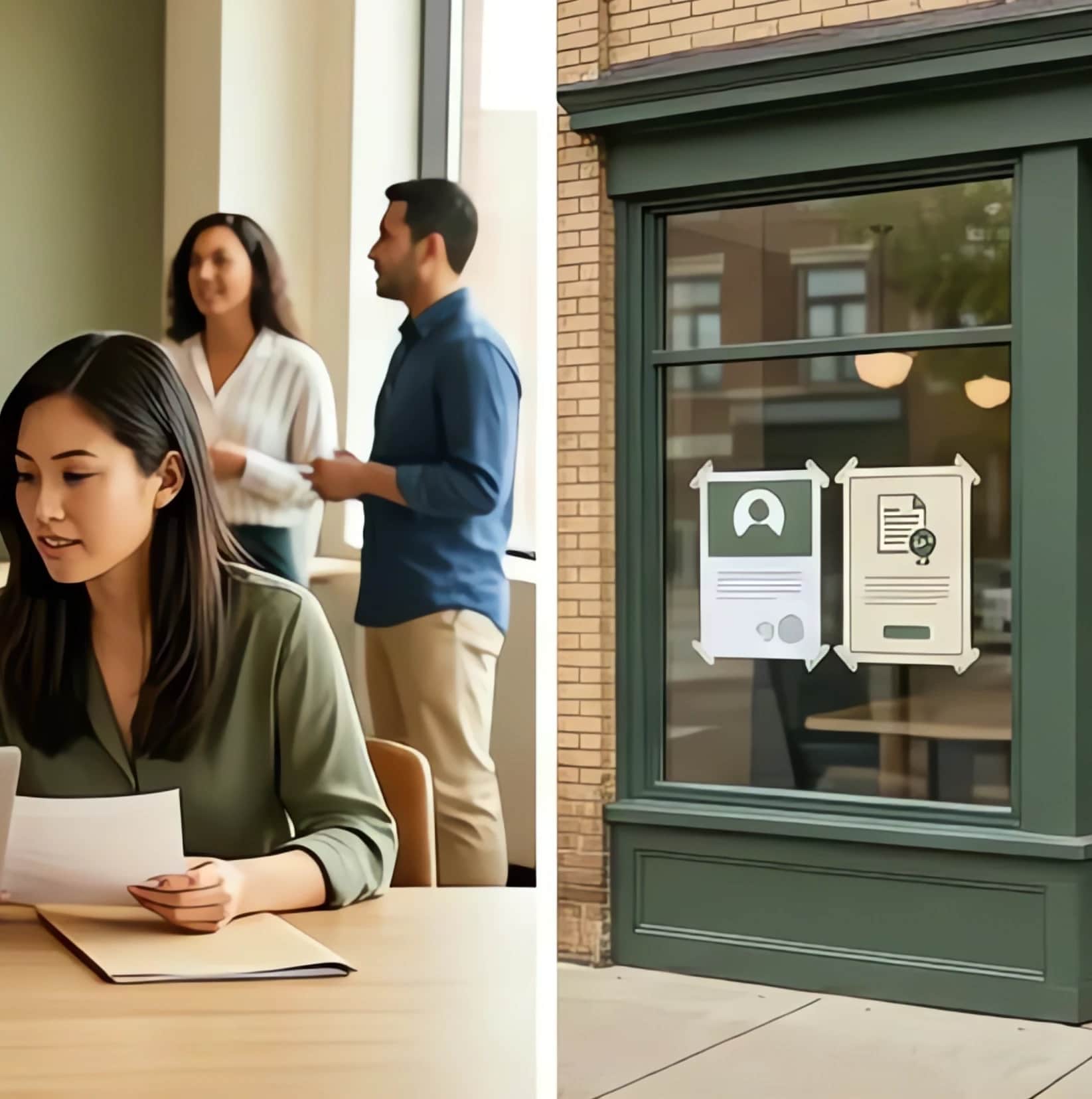
Your sign. Add "Se Busca Personal" or "Estamos Contratando" below "Now Hiring." This signals that Spanish-speaking applicants are welcome. A bilingual sign costs nothing extra.
Your phone line. If applicants call a number on your sign and get an English-only voicemail, you've lost them. AI phone screening tools like My Friendly Staff detect the caller's language and automatically conduct the interview in English or Spanish. The dashboard stays in English — you just get the results.
Your web form. If you have an online application, add a language toggle. Even a simple Spanish translation of the form fields and instructions removes a major barrier.
Your interview. If you're not bilingual yourself, consider having a bilingual employee sit in on interviews. Or use the AI screening results as your first filter — the transcript will show you exactly what the applicant said, even if the call was in Spanish.
What does California law say about bilingual hiring?
A few legal basics every employer should know:
- You can require English proficiency if speaking English is necessary for the job (e.g., reading safety labels, communicating with English-speaking customers). Document why it's a job requirement.
- You cannot require English-only in the workplace unless you have a legitimate business reason and you inform employees in advance. The EEOC has guidelines on this.
- You can prefer bilingual candidates when the role benefits from it. "Bilingual preferred" in a job listing is legal and common.
- You cannot discriminate based on accent unless it materially interferes with job performance. This is from the EEOC's national origin discrimination guidance.
When in doubt, focus on the skill (language ability) rather than the demographic (national origin).
Bilingual Hiring Tips That Work
- Post bilingual listings. Write the job posting in both languages, side by side. It doubles your reach and signals respect.
- Use bilingual screening tools. Automated tools that handle both languages save you the complexity of managing two separate processes.
- Highlight language as a skill, not a requirement (unless it truly is one). "Spanish a plus" attracts bilingual candidates without deterring monolingual ones.
- Translate your onboarding materials. Safety training, employee handbooks, and work schedules in both languages reduce confusion and show new hires they're valued.
- Pay for bilingual skills. If you need someone who speaks both languages, a small premium ($1-2/hr) acknowledges the value and improves retention.
The Bottom Line
Bilingual hiring isn't complicated — it just requires intention. A bilingual sign, a phone line that speaks Spanish, and a genuine welcome go a long way. The businesses that figure this out aren't just being nice. They're accessing talent their competitors can't reach.
For more on California-specific hiring, read about what the minimum wage means for your hiring process. And for restaurant owners specifically, we have a full guide on how to hire restaurant staff.